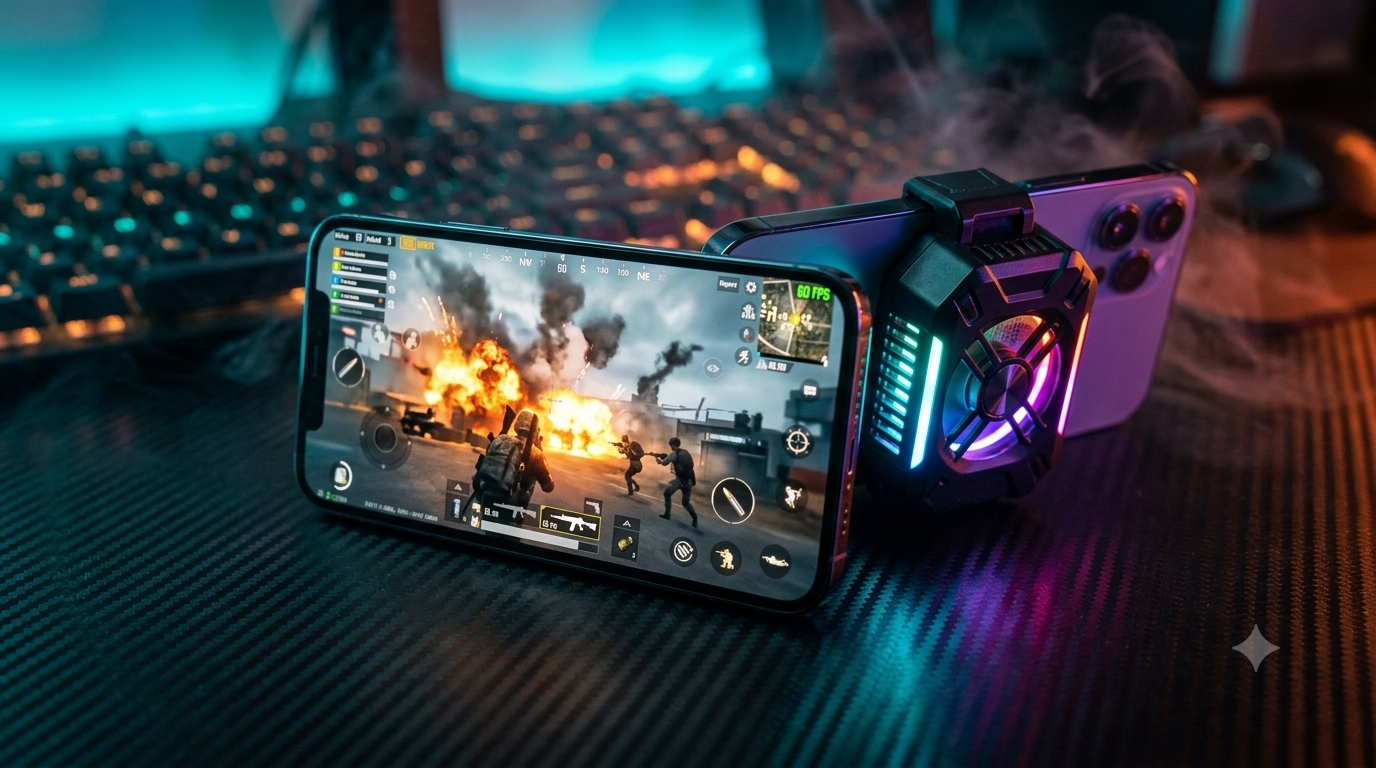

You buy a budget 5G phone expecting smooth gameplay, jump into your second BGMI match, and suddenly the screen dims, the frame drops to 20 FPS, and the back panel feels like a hot pan.
Sounds familiar?
Smartphone brands love plastering huge AnTuTu benchmark scores on their posters. But let’s be completely honest: benchmark scores mean nothing when you’re in the final zone of Erangel with 4 squads rushing you. Sustained performance and heat management are what actually matter.
Over the past two weeks, we pushed the most hyped budget 5G devices to their limits. Here is our unfiltered, real-world breakdown of the 3 best 5G gaming phones under ₹15,000 you can actually trust in 2026.
What Actually Matters for Budget Gaming? (Skip the Marketing Hype)
Before looking at the specs, keep these rules in mind:
- Sustained FPS over Peak FPS: A phone that holds a steady 55-60 FPS for 2 hours is 100x better than a phone that hits 60 FPS for 10 minutes and then throttles down to 30 FPS.
- Vapor Cooling / Heat Dissipation: In Indian room temperatures without AC, budget phones heat up fast. Good thermal control is mandatory.
- Battery Size: 5G networks drain battery rapidly while gaming. Anything under 5000mAh will leave you hunting for a charger by afternoon.
The Top 3 Contenders Under ₹15,000
1. iQOO Z9x 5G (The Pure Performance Beast)
- Processor: Snapdragon 6 Gen 1 (4nm architecture)
- BGMI Settings: Smooth + Extreme (60 FPS supported out of the box)
- Battery: 6,000 mAh (with 44W FlashCharge)
- Real Gaming Experience: The 4nm chip is remarkably power-efficient. Even after an hour of continuous TDM and classic matches, frame drops were almost non-existent. The phone gets warm around the camera module, but never uncomfortably hot.
- The Catch: The display is an LCD rather than an AMOLED, and the speakers are average. But if raw frame rates are your priority, nothing beats this chip in this segment.
2. Moto G64 5G (The Clean Software & Giant Battery Choice)
- Processor: MediaTek Dimensity 7025
- BGMI Settings: Smooth + Ultra (40-45 FPS stable)
- Battery: Massive 6,000 mAh
- Real Gaming Experience: Motorola’s near-stock Android software means zero annoying adware, zero spam notifications, and zero background clutter stealing your RAM while gaming. It doesn’t push high 60 FPS like the iQOO, but it delivers rock-solid stability without sudden lag spikes.
- The Catch: Charging the massive 6000mAh battery with the bundled charger takes roughly 1 hour and 25 minutes.
3. Poco X6 Neo 5G (The Best Display & Casual Gaming Hybrid)
- Processor: MediaTek Dimensity 6080
- BGMI Settings: Smooth + Ultra (40 FPS)
- Display: 120Hz AMOLED with ultra-slim bezels
- Real Gaming Experience: If you love vibrant colors and sharp visuals while playing Free Fire or Call of Duty Mobile, this AMOLED panel is breathtaking for the price. Touch response is snappy, making quick weapon switching very fluid.
- The Catch: Push it with continuous heavy gaming for more than 40 minutes, and you will notice mild thermal throttling.
The Final Verdict: Which One Should You Buy?
- Go for the iQOO Z9x 5G if you are a competitive gamer who demands consistent 60 FPS in BGMI and wants 2 days of battery backup. It is hands-down the performance champion under ₹15,000.
- Go for the Moto G64 5G if you hate bloatware, value privacy, and want reliable casual gaming alongside smooth daily multitasking.
- Go for the Poco X6 Neo if you want the prettiest AMOLED screen for movies and casual gaming sessions.
FAQs
Q1. Can you get true 90 FPS in BGMI under ₹15,000?
Answer: No. Anyone claiming reliable 90 FPS under ₹15,000 is misleading you. The processors in this price segment are optimized for a stable 40 to 60 FPS. For competitive 90 FPS, you need to step up to the ₹20,000–₹25,000 bracket.
Q2. Does gaming on 5G drain more battery than Wi-Fi?
Answer: Yes, significantly. Mobile 5G modems work harder to lock onto network bands, consuming roughly 15% to 20% more battery and generating noticeable extra heat compared to playing over a stable 5GHz Wi-Fi network.
Q3. How much RAM is needed for smooth gaming in 2026?
Answer: Aim for at least 6GB of physical RAM. While brands promote “Virtual RAM” (RAM Expansion), it uses your internal phone storage which is much slower and doesn’t prevent game stuttering.
Q4. Will using a phone case increase heating while playing?
Answer: Yes. Thick silicone and rugged armor cases trap heat against the phone’s back panel. For long gaming sessions, removing the case can reduce internal temperatures by 3°C to 5°C.
Q5. Is an LCD screen bad for gaming compared to AMOLED?
Answer: Not necessarily. While AMOLED offers deeper blacks and punchier contrast, high-refresh-rate (120Hz) LCD screens found in budget phones like the iQOO Z9x offer great touch sampling rates and don’t suffer from screen burn-in during long hours of static game HUD displays.
Q6. Do budget gaming phones receive long-term Android updates?
Answer: Most phones in this budget typically receive 1 to 2 major Android OS updates and 2 to 3 years of security patches. If longevity is key, brands like Motorola and iQOO have improved their update schedules significantly.